
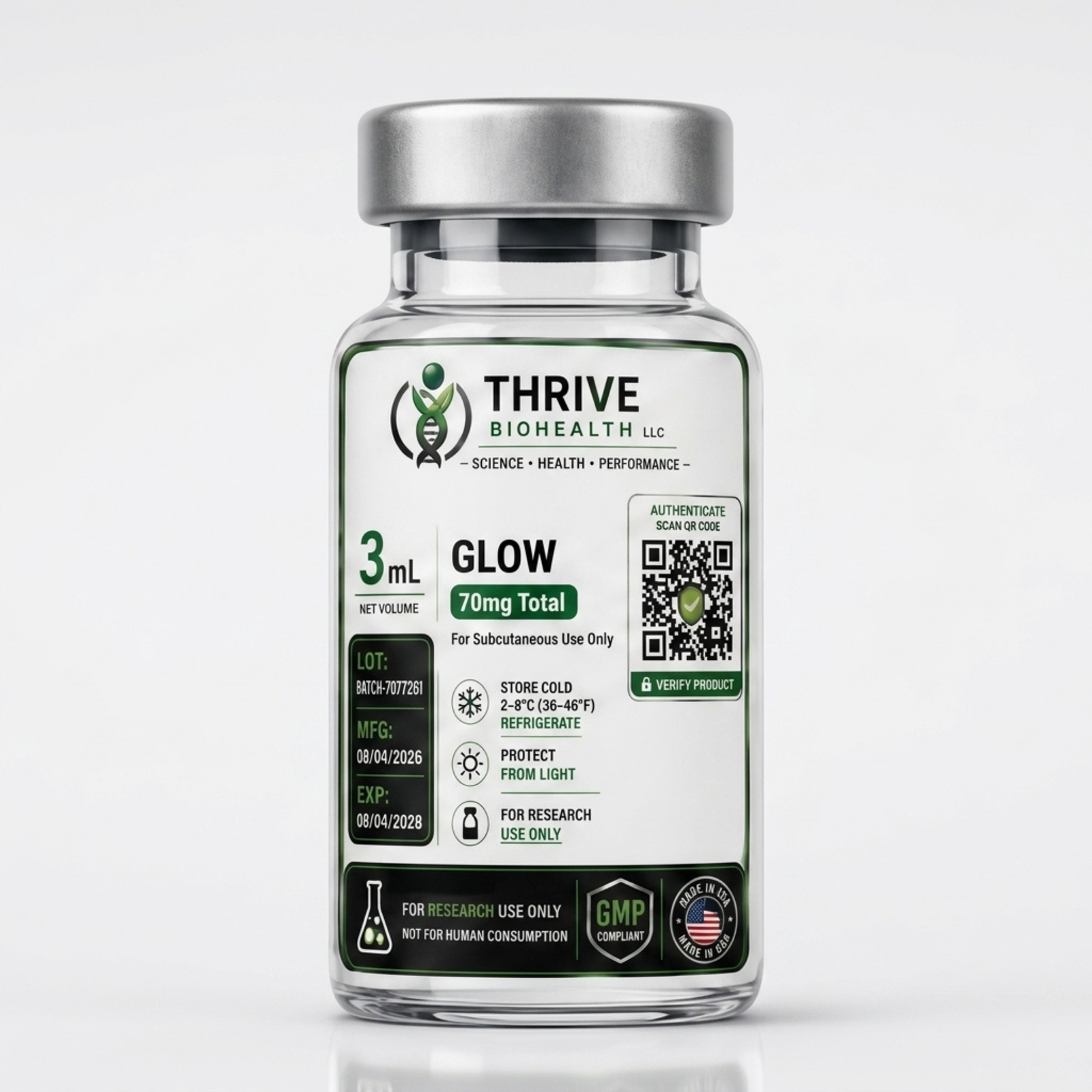
Thrive BioHealth Glow (70 mg) (GHK-Cu, TB-500, BPC-157)
$99.99
Thrive BioHealth Glow Peptide Blend (70 mg) is a synergistic multi-peptide blend co-formulating GHK-Cu (50 mg), TB-500 (10 mg), and BPC-157 (10 mg). Designed for advanced research in skin regeneration, extracellular matrix cross-linking, hair follicle cycling, and soft-tissue recovery. Produced under cGMP conditions with >98% purity guaranteed.
100 in stock
Glow 70mg Blend: GHK-Cu 50mg, TB-500 10mg, BPC-157 10mg
Glow 70mg blend: GHK-Cu 50mg, TB-500 10mg, BPC-157 10mg. Multi-peptide formulation for skin, hair follicle, and recovery research. FOR RESEARCH USE ONLY.
PRODUCT DETAILS
About Glow 70mg (GHK-Cu, TB-500, BPC-157) Peptide Blend
Glow 70mg is a co-formulated multi-peptide research preparation supplying three distinct sequences in a single lyophilized vial: GHK-Cu at 50mg, TB-500 at 10mg, and BPC-157 at 10mg, for a combined 70mg of peptide content. It is provided to laboratories investigating skin biology, hair follicle dynamics, and soft tissue recovery pathways, fields in which the processes under study depend on several overlapping signalling systems rather than one isolated route. Supplying the three as one preparation removes the handling variability of combining separate vials.
GHK-Cu, the copper bound tripeptide Glycyl-L-Histidyl-L-Lysine, is the dominant component by mass. A naturally occurring peptide copper complex first isolated from human plasma, it is studied both as a pleiotropic signalling molecule and as a copper chaperone. Research interest centres on its reported influence over extracellular matrix proteins such as collagen and elastin, on antioxidant enzyme expression, and on the broad set of genes whose transcription has been observed to shift under GHK exposure.
TB-500, the synthetic counterpart of Thymosin Beta-4, contributes a different tier of activity. Thymosin Beta-4 is a naturally occurring 43 amino acid peptide present in virtually all human and animal cells, and its principal intracellular function is sequestration of G-actin monomers, which governs actin polymerisation and therefore cellular motility. In laboratory models it is examined for cell migration, matrix remodelling, angiogenesis, and inflammatory signalling.
BPC-157 is a synthetic pentadecapeptide representing a partial sequence of a protein found in human gastric juice. Unusually stable for a peptide of its class, it has been examined across a wide span of preclinical injury models, with mechanistic work concentrating on growth factor receptor signalling, nitric oxide modulation, and cytoskeletal reorganisation in fibroblasts. Here it sits at the same 10mg level as TB-500, mirroring the pairing most widely studied together in tissue repair research.
A combination preparation is investigated rather than three single agents because repair cascades proceed through simultaneous, overlapping signals: matrix synthesis and turnover, vascular ingrowth, cell migration, and inflammatory resolution. Single agent designs characterise one arm of that network at a time but cannot show whether observed effects are additive, redundant, or dependent on one another. Investigators in dermatological science, hair follicle biology, wound healing, and connective tissue research use blends of this type to compare combined exposure arms against single peptide controls within one experimental framework.
This material is supplied For Research Use Only and is not approved for human or veterinary use.
Mechanism of Action
Glow 70mg acts through a composite of the pathways modulated by its three components. None works through a single dominant receptor interaction, and each intervenes at a different tier of the repair cascade.
GHK-Cu acts first as a copper carrier. The tripeptide has an exceptionally high affinity for copper(II). By delivering copper, an essential cofactor for antioxidant enzymes such as superoxide dismutase, it raises endogenous antioxidant capacity in culture and also scavenges reactive oxygen species directly. Its second activity is gene expression modulation: transcriptomic analyses show GHK-Cu shifting expression of a substantial portion of the genome, upregulating genes tied to tissue repair and antioxidant defence while downregulating those linked to inflammation and fibrosis.
Within the extracellular matrix, GHK-Cu exerts dual modulatory control. It stimulates synthesis of collagen I and III, elastin, and glycosaminoglycans through pathways including the TGF-beta and SMAD cascade, while simultaneously upregulating matrix metalloproteinases and their tissue inhibitors, permitting breakdown of disorganised collagen. That balance is why the peptide recurs in dermal and wound healing models. It is also reported to act as a chemoattractant for macrophages and to modulate pro-angiogenic factors such as VEGF.
TB-500 works at the level of the cytoskeleton. As the synthetic form of Thymosin Beta-4, its principal intracellular role is actin sequestration: it binds G-actin monomers and maintains a mobilisable pool for polymerisation into F-actin filaments. That control over actin dynamics is the mechanical basis of cellular motility, enabling fibroblasts, keratinocytes, and endothelial cells to migrate and remodel tissue, and it underpins re-epithelialisation and angiogenesis in laboratory models. Extracellularly it acts without a single identified high-affinity receptor and promotes matrix metalloproteinase expression that allows matrix turnover.
BPC-157 likewise has no identified high-affinity receptor, and its activity is described instead as modulation of several pathways at once. Research indicates it upregulates Vascular Endothelial Growth Factor Receptor 2, whose activation initiates the FAK-paxillin and PI3K/Akt/eNOS cascades. Focal Adhesion Kinase and paxillin are core components of focal adhesions and mediate cell adhesion and migration, so activation of that axis is thought to drive endothelial migration and proliferation. The PI3K/Akt branch phosphorylates endothelial nitric oxide synthase, raising nitric oxide production, and the peptide is reported to normalise nitric oxide levels under both over and under production. It also promotes F-actin reorganisation in fibroblasts.
The overlap between the three is where combination work concentrates. GHK-Cu supplies matrix and transcriptional groundwork alongside copper dependent antioxidant capacity; BPC-157 supplies angiogenic and adhesion signalling; TB-500 supplies the actin machinery those signals need to translate into cell movement. Two of the three converge independently on angiogenesis and on matrix metalloproteinase regulated remodelling, and two act on the actin cytoskeleton by different routes. Combined designs test whether stacking a signalling initiator, a vascular modulator, and a motility regulator differs from any one alone.
For Research Use Only.
Research Applications
Glow 70mg is used across preclinical programmes examining skin, hair follicle, and soft tissue biology, in each case in controlled laboratory settings. Its composition allows designs built around effects no single agent arm can isolate.
In dermal research, in vitro experiments with human dermal fibroblast cultures are the most common format, used to quantify effects on the synthesis of collagen, elastin, and other extracellular matrix proteins by ELISA or Western blotting for protein expression and qPCR for gene transcription. Keratinocyte cultures are used alongside them to examine migration and barrier related endpoints. Because copper delivery bears on lysyl oxidase activity, the enzyme that cross-links collagen and elastin, some designs connect peptide exposure to measurable changes in matrix mechanical properties rather than to protein quantity alone.
Hair follicle and trichology research employs both in vitro and ex vivo formats. Cultured dermal papilla cells, which regulate the hair growth cycle, are used to examine cell proliferation and the expression of growth factors such as VEGF. Dissected hair follicle organ cultures allow investigators to observe effects on the follicular cycle itself, including duration of the anagen phase, and to probe interactions with follicular stem cells and their signalling pathways.
Wound healing and angiogenesis form a third cluster. Preclinical rodent models using standardised incisional or full thickness excisional wounds are used to monitor rate of closure, re-epithelialisation, granulation tissue formation, and neovascular density, with histological analysis assessing collagen organisation and scar morphology. In vitro angiogenesis work commonly uses Human Umbilical Vein Endothelial Cells to measure migration, proliferation, and tube formation, endpoints that map onto the pro-angiogenic and motility mechanisms attributed to the components.
Tendon, ligament, and muscle research draws primarily on the BPC-157 and TB-500 literature, where rodent models of tendon transection, ligament damage, and muscle contusion are assessed for collagen fibre organisation by histology, fibroblast proliferation, tensile strength of repaired tissue, and functional recovery rates. Extracellular matrix remodelling is examined across all these settings through matrix metalloproteinase and tissue inhibitor expression, the point at which the dermal and musculoskeletal literatures share readouts.
The value of studying the blend rather than the components lies in what combined arms can resolve. Repair cascades involve matrix remodelling, angiogenesis, cell migration, and inflammatory resolution occurring together, so a single agent design reports on one slice of a network operating as a whole. Combined exposure arms compared against single peptide and vehicle controls let investigators distinguish additive from redundant pathway effects, detect interaction between copper dependent matrix activity and actin driven motility, and test whether time-to-closure and matrix quality metrics differ from either component alone.
All applications described here are strictly preclinical and for research purposes only.
Formulation Handling
For Research Use Only. Glow 70mg is supplied as a lyophilized powder to maximise stability and shelf life. Store the unreconstituted vial in a freezer at or below -20 degrees Celsius, protected from direct light; short term storage at 2 to 8 degrees Celsius is acceptable prior to reconstitution.
Allow the vial to equilibrate to room temperature before opening, which prevents condensation from forming on and degrading the powder. Reconstitution must be carried out using aseptic technique in a controlled laboratory environment.
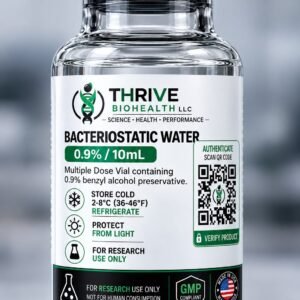
The recommended diluent is sterile bacteriostatic water containing 0.9% benzyl alcohol, which inhibits microbial growth in a multi-use vial. Direct the diluent slowly down the inside wall of the vial rather than as a stream onto the powder itself. Swirl or roll the vial gently between the palms until the contents dissolve completely; do not shake or agitate vigorously, as shearing can denature and degrade the peptides.
The reconstituted solution should be clear and free of particulates. Store the reconstituted solution refrigerated at 2 to 8 degrees Celsius. For work spanning longer periods, aliquot the freshly reconstituted solution into single use volumes and store them at -20 degrees Celsius so that repeated freeze-thaw cycles are avoided, and keep all material protected from light.
One point is specific to this preparation: because Glow is a multi-component blend, the entire vial reconstitutes as a single solution and the three peptides cannot be separated once the diluent is added. Study designs requiring the components at ratios other than the stated 50mg, 10mg, and 10mg should use individual vials instead.
Use sterile syringes and appropriate personal protective equipment throughout.
Quality Standards
Each peptide in Glow 70mg is synthesised in a cGMP compliant facility under strict manufacturing, purification, and handling protocols. Component peptides are individually characterised before blending rather than assessed only as a finished mixture, which is what allows the composition and ratio of the final vial to be stated with confidence and reproduced from lot to lot.
Purity of each component is verified by High-Performance Liquid Chromatography, with every lot held to a purity of >99%. Identity and structural integrity are confirmed for each constituent peptide by Mass Spectrometry, which verifies that the measured molecular weight matches the theoretical mass of the intended sequence, including copper chelation in the case of GHK-Cu.
Each batch is additionally tested for endotoxin, since residual bacterial contaminants can confound inflammatory readouts in cell based assays and in animal models. A lot-specific Certificate of Analysis is available for every batch.
For a blend, that certificate reports the identity and purity of each constituent peptide individually as well as the stated ratio of the finished preparation, alongside batch number and manufacturing date for full lot traceability. This documentation allows researchers to attribute experimental results to a characterised material and to reproduce conditions across experimental replicates.
This product is intended for Research Use Only.
View Certificate of Analysis →
Glow is a 70mg multi-peptide research blend formulated to support laboratory investigations into skin biology, hair follicle dynamics, and tissue recovery pathways. This combination preparation brings together complementary peptide sequences targeting overlapping regenerative signaling cascades for synergistic study designs.
Researchers have utilized multi-peptide blends to examine combinatorial effects on fibroblast growth factor expression, keratinocyte migration, collagen type I and III ratios, and antioxidant defense enzyme upregulation. The blend format allows investigation of peptide interactions that single-agent studies may not capture.
Each vial is manufactured under strict quality-control protocols with HPLC purity verification for each component peptide. Batch-tested for sterility, endotoxin levels, and peptide content to ensure reproducible results across experimental series.
Store lyophilized at -20°C. Reconstituted at 2-8°C, use within 60 days. Avoid repeated freeze-thaw cycles to maintain peptide integrity.
For research and laboratory use only.
Skin-biology research increasingly uses defined peptide combinations to model the interplay between matrix synthesis and oxidative defense. Copper-peptide pairs are of particular interest because copper delivery affects lysyl oxidase activity — the enzyme that cross-links collagen and elastin — allowing studies that connect peptide exposure to measurable changes in matrix mechanical properties.
For Research Use Only (RUO). Not for human consumption, veterinary use, diagnostic use, or therapeutic purposes. All products are intended for in vitro research in licensed laboratory environments only.
| Presentation | Lyophilized Vial |
|---|---|
| Strength | 70 mg |
| Brand | Thrive BioHealth |
Related products
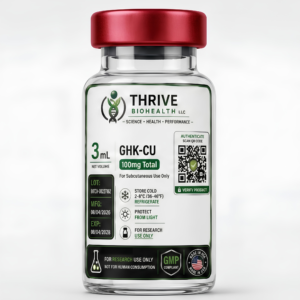
Thrive BioHealth GHK-Cu (100 mg)
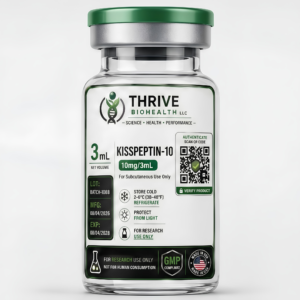
Thrive BioHealth Kispeptin (10 mg)
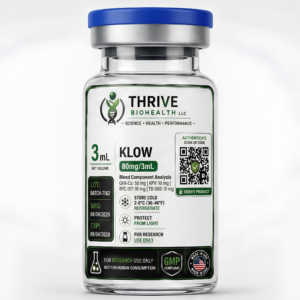
Thrive BioHealth Klow (80 mg) (GHK-Cu, TB-500, BPC-157 and KPV)
Reviews
There are no reviews yet.